Loading...

Skip to main content

Tech Updates — Sep 6 – Sep 12, 2026

· 2 min read
Tech Updates (automated)
Weekly digest drafted by AI, reviewed by humans

This week's biggest signal is agentic tooling maturing fast across Google Cloud: Gemini Enterprise Agent Platform's Computer Use and Shell sandboxes reached general availability, and Model Context Protocol servers shipped for both API Gateway and IAM. Security teams also have two items to act on — a critical GitLab path-traversal fix and a high-severity Slurm vulnerability affecting Cluster Toolkit. All five domains had material changes this week.

Aliz AI Survey 2026 Q3 Results

· 16 min read
Sandor Muranyi
Principal Architect at Aliz

Internal survey · engineering AI adoption · wave 1 vs wave 2

Two identical-sized samples, four months apart. 42 responses in March 2026, 42 in July 2026. Every question in both questionnaires is charted below. Wave 2 added five questions and several new answer options; those are marked in green and have no baseline.

How to read the charts: grey bars = March 2026 · dark‑green bars = July 2026 · bright‑green bars = answer options new in wave 2.

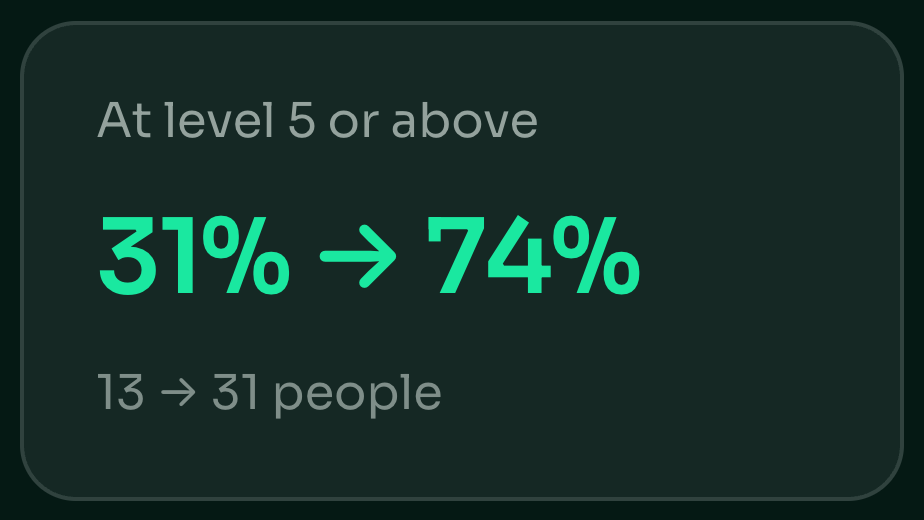
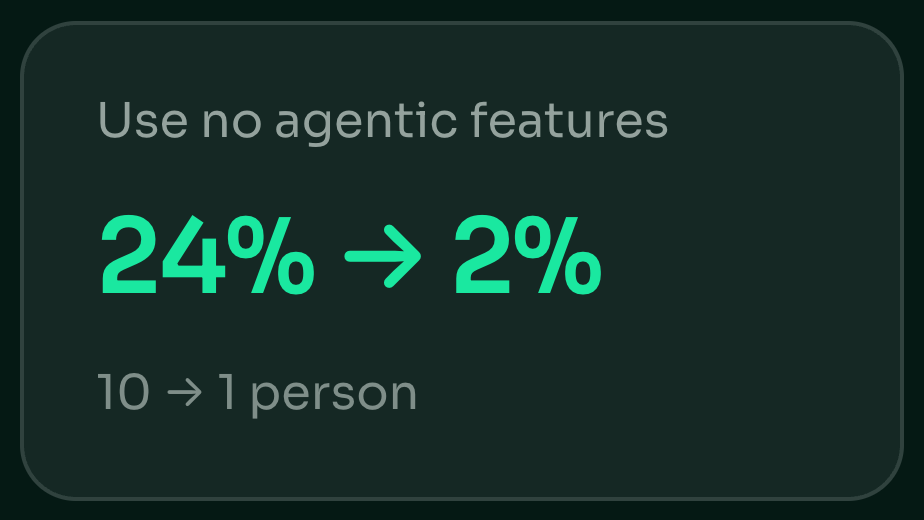
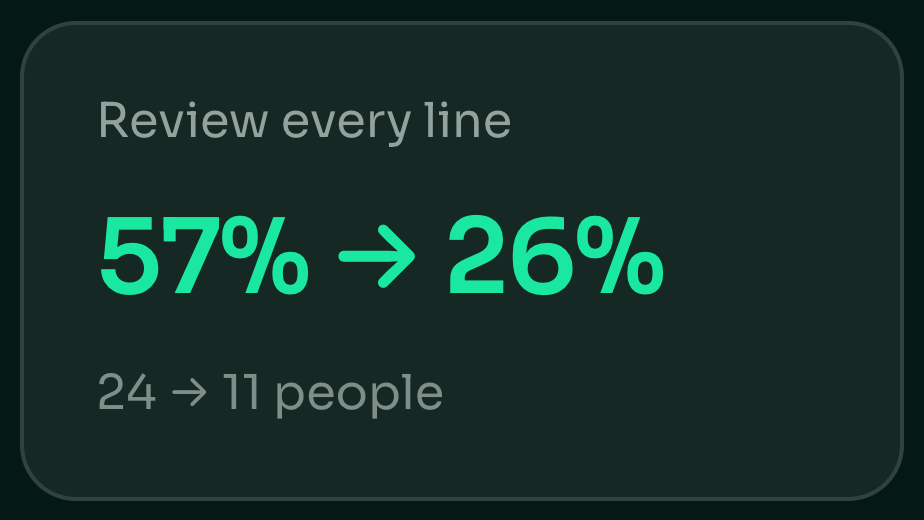
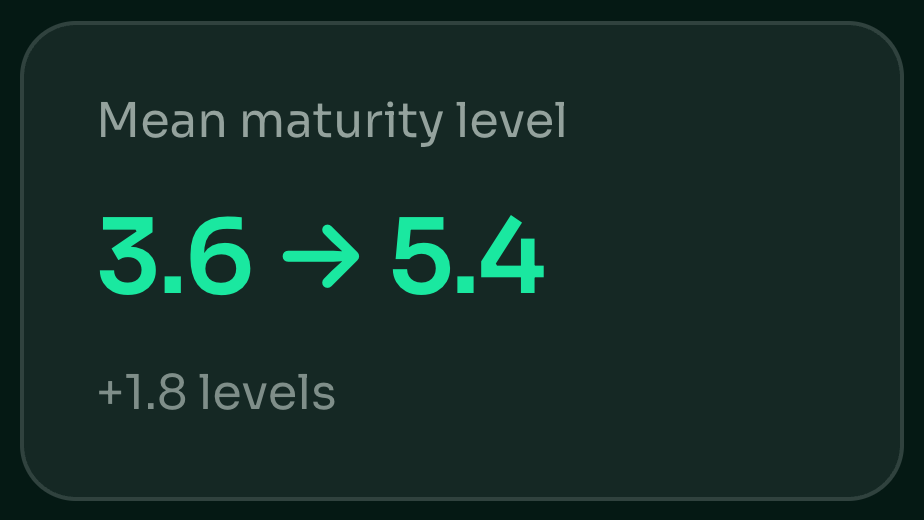
Mean maturity level: 3.6 → 5.4 (+1.8 levels).At level 5 or above: 31% → 74% (13 → 31 people).Use no agentic features: 24% → 2% (10 → 1 person).Review every line: 57% → 26% (24 → 11 people).

How AI helped me win pre-sales projects efficiently

· 8 min read
Tamás Imets
AI Solution Architect at Aliz

I work in pre-sales, which means my job is to take a client's problem and turn it into something concrete enough that they can decide to work with us. Over the last few months AI has changed how I do this quite a lot, and I wanted to write down what actually made a difference, using two projects as examples: One Hungary and VEON.

The short version is that AI made me faster, but the more interesting part is that it changed which parts of the job are actually worth the time. I will try to explain what I mean.

How I shipped production code in a language I don't know

· 6 min read
Gábor Kiszler
Engineer at Aliz

I shipped a production application in TypeScript — a language I've barely used — with a Node/Fastify backend, a React frontend, Firestore for data, and Terraform-managed infrastructure on GCP. I worked mostly from a terminal rather than a full IDE, and the frontend was something I'd essentially never done. On paper that should have produced confident nonsense. It didn't, and the reason wasn't talent or luck. It was the workflow.

For a few weeks I worked strictly spec-first, and the loop had a fixed shape:

Plan → Propose → Codex review → Apply → Review → Archive

I planned and discussed the change; OpenSpec turned that into the artifacts (proposal, design, spec, task list), so my real work was the thinking and the option-weighing, not the boilerplate; an adversarial reviewer (Codex) tore into the proposal; I implemented it behind failing tests; the implementation got reviewed again; and finally the change was archived and its spec folded into the living docs. A lot of the code itself was written by an AI agent, which makes the guardrails the whole story.

Because the app was greenfield, the big-picture plan — the milestones — was drawn up front, before any change. I worked through them in order; then, as the system took shape and the real decisions started surfacing, I spun up OpenSpec changes on the fly, one per decision. So planning was two-layered: a stable milestone map set at the start, and a stream of small specs filling it in as I learned what the thing actually needed.

Here's the honest version — what genuinely helped, and what was ceremony I had to decide was worth it.

Find and Contribute Solution Blocks from Your Coding Assistant

· 8 min read
Gábor Volczér
AI Engineer at Aliz

The Solution Block Hub only pays off if people actually reach for it — before they rebuild something we already have, and after they build something worth sharing. The problem is that "go search the Hub" is a context switch, and context switches don't happen mid-flow.

So now the Hub comes to you. Two skills put it directly inside your coding assistant, working across Claude Code, Codex CLI, and GitHub Copilot CLI: sb-hub-search (before you build — "do we already have a block for this?") and sb-hub-contribute (after you build — "is any of this worth turning into a block?"). Together they close the loop: reuse first, contribute back.

Introducing the Solution Block Hub

· 2 min read
Balázs Németh
Data/AppDev Architect at Aliz

We build a lot of things at Aliz. Terraform modules, data pipelines, GenAI agents, app templates — hundreds of repositories across the organization. The problem is that nobody can find any of it. Someone on the Data track builds a BigQuery CDC pipeline, and six months later someone on AppDev builds the same thing from scratch because they didn't know the first one existed.

The Solution Block Hub fixes this. It's an AI-powered platform that automatically discovers, summarizes, and indexes our GitHub repositories — and puts a Gemini-based search assistant in front of the whole thing.

Aliz Dev Hub Is Live 🚀

· 4 min read
Gergely Sipos
Frontend Architect at Aliz

We've been talking about it for a while, and now it's real: the Aliz Dev Hub is live. It's our collective engineering handbook — a single place where we capture what actually works at Aliz, from GCP patterns to frontend conventions to infrastructure decisions.

It's not a wiki. It's not a Confluence space. It's a Docusaurus site backed by Git, reviewed through pull requests, and deployed like any other piece of software we ship.